%20scale(0.100000,-0.100000)'%20fill='%23ffffff'%20stroke='none'%3e%3cpath%20d='M1439%203393%20c-26%20-59%20-481%20-1134%20-631%20-1488%20-61%20-143%20-166%20-393%20-235%20-555%20-424%20-1000%20-543%20-1281%20-543%20-1286%200%20-3%20221%20-3%20491%20-2%20l491%203%20117%20295%20118%20295%20648%200%20649%200%20106%20-260%20c59%20-143%20114%20-277%20123%20-298%20l16%20-38%201048%204%201048%204%20125%2025%20c299%2061%20490%20156%20647%20322%2095%20100%20154%20206%20188%20339%2022%2082%2024%20109%2021%20257%20-3%20134%20-7%20179%20-25%20238%20-74%20250%20-242%20418%20-543%20542%20l-88%2037%2052%2024%20c84%2039%20168%2097%20239%20166%20l66%2064%20211%20-523%20c116%20-288%20301%20-746%20411%20-1018%20l200%20-495%20436%200%20436%200%20114%20284%20c63%20156%20116%20286%20118%20287%202%202%2056%20-126%20119%20-284%20l116%20-287%20437%200%20437%200%2037%2095%20c33%2083%20238%20593%20576%201430%2057%20140%20169%20419%20250%20620%2081%20201%20217%20538%20303%20750%2085%20212%20163%20406%20174%20433%20l18%2047%20-513%200%20-512%200%20-379%20-1055%20c-209%20-580%20-382%20-1052%20-385%20-1049%20-3%203%20-47%20121%20-98%20262%20l-92%20256%20144%20355%20c341%20847%20455%201129%20474%201179%20l21%2052%20-513%200%20-512%200%20-45%20-125%20c-24%20-69%20-45%20-123%20-47%20-122%20-1%202%20-22%2057%20-46%20123%20l-42%20119%20-523%203%20c-287%201%20-522%200%20-522%20-3%200%20-3%20142%20-357%20317%20-788%20174%20-430%20318%20-792%20321%20-804%205%20-27%20-168%20-518%20-178%20-506%20-4%204%20-148%20402%20-320%20883%20-172%20481%20-341%20952%20-374%201045%20l-62%20170%20-522%203%20-522%202%206%20-24%206%20-24%20-64%2013%20c-144%2030%20-248%2033%20-1165%2034%20l-943%201%20-2%20-587%20-3%20-588%20-97%20230%20c-53%20127%20-167%20394%20-252%20595%20l-155%20365%20-451%203%20-451%202%20-20%20-47z%20m3064%20-724%20c135%20-21%20217%20-67%20265%20-148%2024%20-40%2027%20-56%2027%20-131%20-1%20-67%20-5%20-94%20-22%20-125%20-29%20-54%20-78%20-100%20-136%20-125%20-95%20-42%20-177%20-50%20-532%20-50%20l-334%200%200%20287%20c0%20158%202%20290%205%20295%208%2012%20644%2010%20727%20-3z%20m-2421%20-802%20c98%20-248%20181%20-460%20184%20-469%206%20-17%20-16%20-18%20-365%20-18%20-204%200%20-371%203%20-371%208%20-1%2012%20365%20932%20370%20932%203%200%2085%20-204%20182%20-453z%20m2568%20-453%20c97%20-20%20148%20-43%20199%20-90%2056%20-49%2083%20-105%2089%20-179%209%20-122%20-43%20-222%20-148%20-279%20-106%20-58%20-118%20-59%20-586%20-63%20l-431%20-4%20-2%20315%20-2%20316%20403%200%20c322%20-1%20418%20-4%20478%20-16z'/%3e%3c/g%3e%3c/svg%3e)


'/%3e%3cpath%20fill-rule='evenodd'%20clip-rule='evenodd'%20d='M110.863%2022.5585L112.172%2037.5125L124.468%2028.9025L110.863%2022.5585ZM113.025%2025.6452L113.764%2034.0974L120.714%2029.2309L113.025%2025.6452Z'%20fill='url(%23paint1_linear_2858_1383)'/%3e%3cpath%20d='M68.8774%200L72.3415%206H65.4133L68.8774%200Z'%20fill='url(%23paint2_linear_2858_1383)'/%3e%3cpath%20d='M121.363%2062.8284L119.569%2069.5206L114.67%2064.6216L121.363%2062.8284Z'%20fill='url(%23paint3_linear_2858_1383)'/%3e%3cpath%20d='M19.5344%2069.1927L25.5344%2072.6569L19.5344%2076.121L19.5344%2069.1927Z'%20fill='url(%23paint4_linear_2858_1383)'/%3e%3cdefs%3e%3clinearGradient%20id='paint0_linear_2858_1383'%20x1='10.6145'%20y1='35.3974'%20x2='6.12826'%20y2='18.6547'%20gradientUnits='userSpaceOnUse'%3e%3cstop%20stop-color='%23FF455B'/%3e%3cstop%20offset='1'%20stop-color='%23FF7245'/%3e%3c/linearGradient%3e%3clinearGradient%20id='paint1_linear_2858_1383'%20x1='110.863'%20y1='22.5585'%20x2='120.805'%20y2='36.7572'%20gradientUnits='userSpaceOnUse'%3e%3cstop%20stop-color='%23FF455B'/%3e%3cstop%20offset='1'%20stop-color='%23FF7245'/%3e%3c/linearGradient%3e%3clinearGradient%20id='paint2_linear_2858_1383'%20x1='68.8774'%20y1='3.12331e-08'%20x2='68.8774'%20y2='10.6667'%20gradientUnits='userSpaceOnUse'%3e%3cstop%20stop-color='%23FF455B'/%3e%3cstop%20offset='1'%20stop-color='%23FF7245'/%3e%3c/linearGradient%3e%3clinearGradient%20id='paint3_linear_2858_1383'%20x1='121.363'%20y1='62.8284'%20x2='113.82'%20y2='70.3709'%20gradientUnits='userSpaceOnUse'%3e%3cstop%20stop-color='%23FF455B'/%3e%3cstop%20offset='1'%20stop-color='%23FF7245'/%3e%3c/linearGradient%3e%3clinearGradient%20id='paint4_linear_2858_1383'%20x1='19.5344'%20y1='69.1927'%20x2='24.8677'%20y2='78.4304'%20gradientUnits='userSpaceOnUse'%3e%3cstop%20stop-color='%23FF455B'/%3e%3cstop%20offset='1'%20stop-color='%23FF7245'/%3e%3c/linearGradient%3e%3c/defs%3e%3c/svg%3e)

Requirements and catalogue model
Agree on the assortment, attributes, variations, product data sources and sales rules.


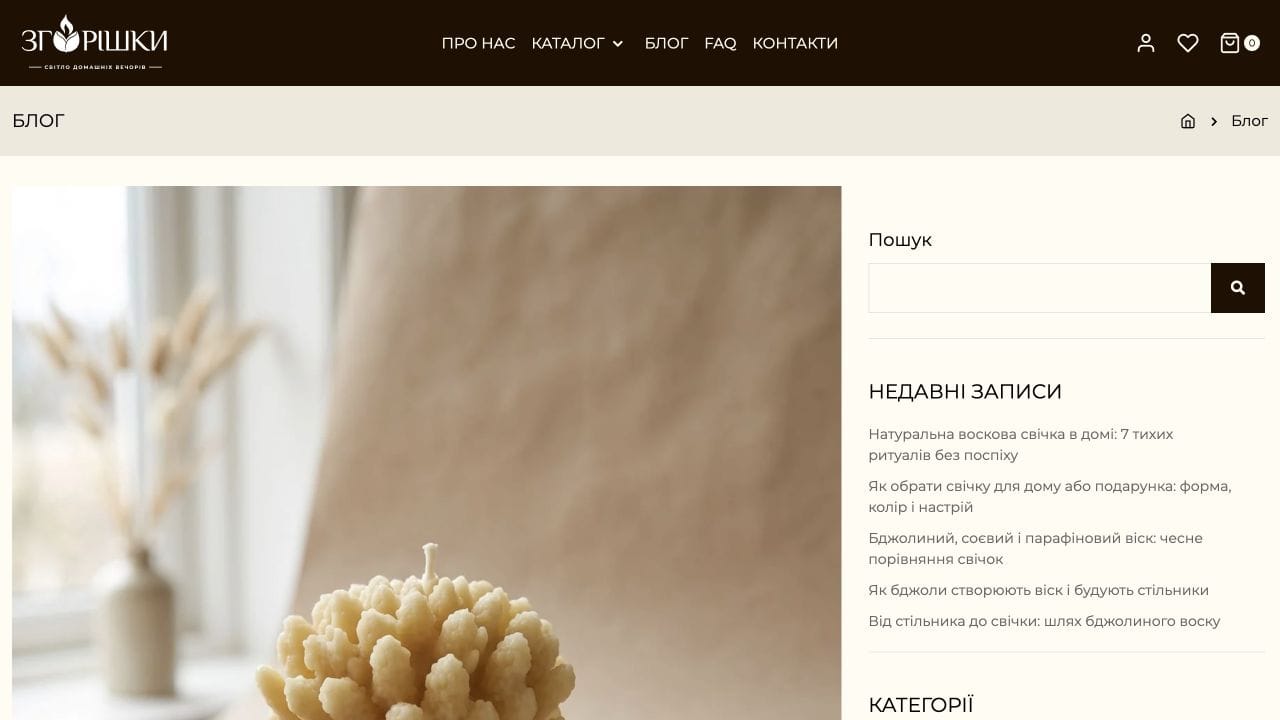
Zhorishky is a Ukrainian brand of sculptural candles made from natural beeswax. Its website needs to communicate texture, shape and atmosphere while giving customers a clear route to ordering. The store combines an expressive brand presentation with a practical catalogue, from small walnut-shaped candles to flowers, decorative houses and other sculptural designs.
A warm cream palette, dark contrasting accents, large product photographs and expressive typography reflect the brand's home-centred identity. The main navigation separates the catalogue, brand story, blog, frequently asked questions and contact information. Visitors can go straight to shopping or learn about the material and the workshop's approach first.
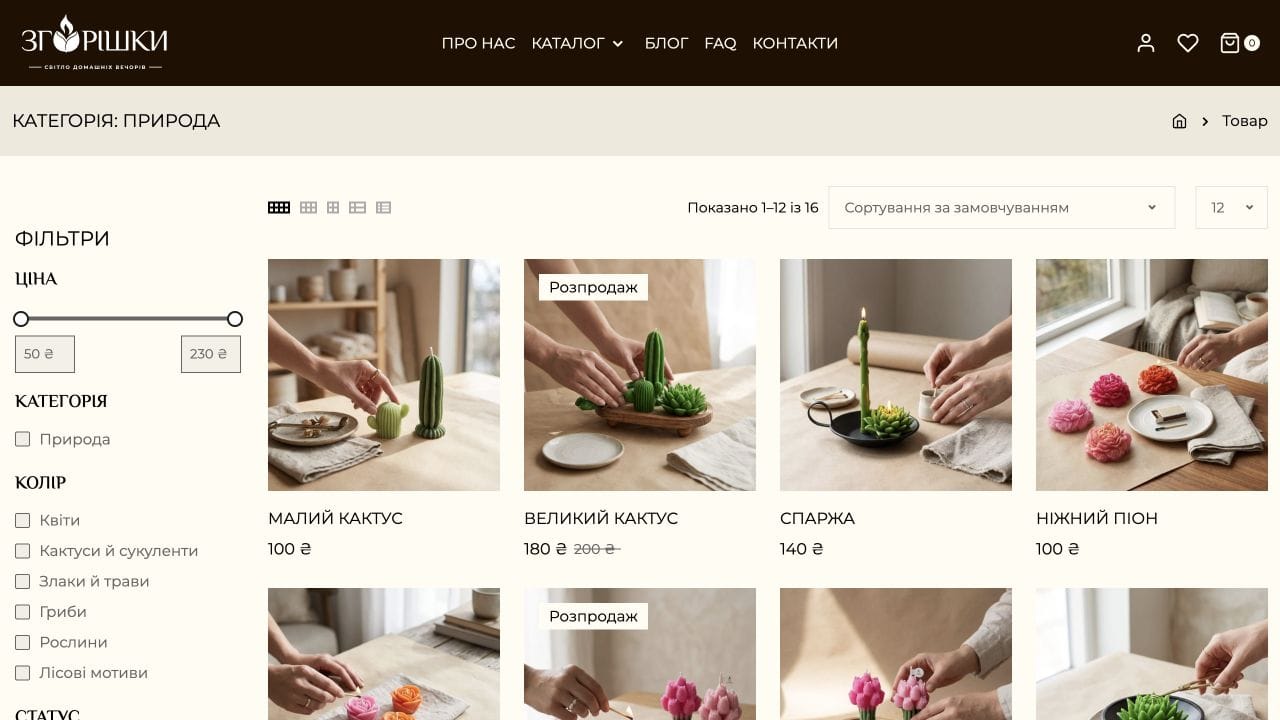
Collections follow recognisable themes: nature, animals, home and stories, people and protective symbols, fruits and treats. The catalogue offers price, category, theme and availability filters, sorting and several product display modes. Dedicated collection pages narrow the choice without requiring shoppers to browse the whole range. Product imagery, prices and discounts are visible directly in the grid.
Each product page combines an image gallery, short description, price, SKU, categories, tags and quantity selection. Products with variants provide a colour selector. Longer descriptions explain the form, material and use of each candle, with separate tabs for additional information and reviews. Wishlists, related products and recently viewed items support continued discovery. The cart and customer profile complete the ordering journey.
The store runs on WordPress and WooCommerce. PHP supports the CMS backend, while HTML, CSS, JavaScript and jQuery provide layout and interactive behaviour. The pages use Elementor alongside product variation and wishlist functionality. The setup brings product management, information pages and editorial publishing into one content environment.
The blog covers choosing candles, beeswax and everyday rituals at home. A dedicated brand page adds the story of handmade production. Categories, product pages, thematic tags and articles create connected paths through the website: a visitor can find an explanation and continue to relevant products. This gives search engines distinct, useful pages for different visitor intents without repeating a single promotional description everywhere.
Zhorishky shows how an independent maker's expressive presentation can work together with the practical functions of an online store. The gallery presents real catalogue, product, brand and blog pages. We approach similar needs through website and online store development. For a different product discovery model, explore the Pulsar case.
A typical ecommerce delivery sequence. The description of this case sets out its specific functions and completed scope.
Agree on the assortment, attributes, variations, product data sources and sales rules.

Define the route from product discovery to ordering, page structure and designs.

Connect the catalogue, product pages, cart and account. Implement only the services and data exchanges included in the brief.

Check product data, variations, prices and order journeys; prepare page URLs and metadata.

Agree on deployment, access handover and subsequent improvements. Support is scoped separately.